
2025 Annual Report
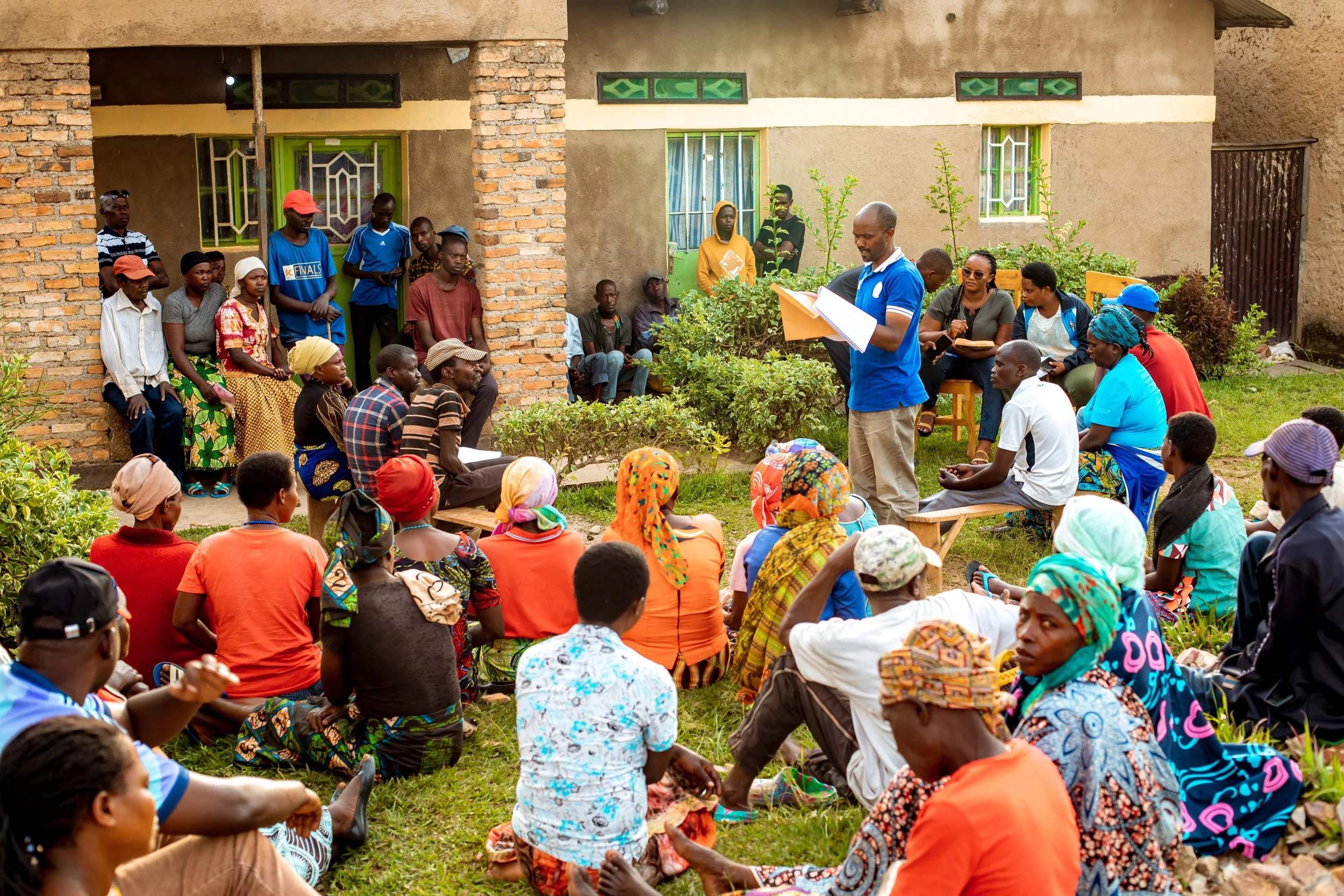
Spark Microgrants marked 15 years of advancing community-driven development in 2025. Since our founding, we’ve supported over 1.2 million people across 1,375 villages to lead their own development and build lasting systems for collective action.
I. Program Reach
In a time of significant change in the global development landscape, we remain laser focused on supporting our village partners to lead and determine their own development.
In 2025, we reached over 56,000 additional households in 270 new villages across four countries. We supported 378 community-designed projects ranging from animal rearing to public infrastructure investments. Across the 682 active villages in 2025, program quality remained high. On average:
71% of households attended village meetings
90% of those attending meetings actively contributed to decision-making
women made up 63% of meeting participants
83% of villages had active savings groups
Through independent savings and advocacy, communities mobilized resources and independently launched an additional 644 initiatives, demonstrating the powerful multiplier effect of Spark’s approach.

II. Partnerships
We are forging new and innovative partnership models that allow us to deliver our work at scale–reaching more communities, more effectively.
2025 marked a defining milestone for scaling Spark’s village grants and planning approach: the Government of Rwanda adopted a national framework for participatory village planning, committing to embed community-led decision-making across all 14,700+ villages country-wide. This positions Rwanda as a global model for citizen-driven development and demonstrates that this approach can move beyond pilots to national scale through government.

We also deepened partnerships with global institutions, including launching a joint strategy with the World Bank to:
Strengthen the evidence base for community-driven development: Developing and sharing new evidence to demonstrate how shifting decision-making and resources directly to communities drives durable, long-term impact.
Provide design support for World Bank Funded programs: Working with World Bank teams to design and innovate large-scale development programs—embedding best practices in village grants and facilitation to ensure funding reaches communities more effectively.
Unlock large-scale financing to the village-level: Combining Spark’s expertise and agility with the World Bank’s scale and influence, our goal is to shift billions in development financing directly to villages and elevate community-led development as a global standard.
III. Research & Impact
Evidence increasingly shows that our model builds enduring social infrastructure, bridges government and citizen engagement, and catalyzes collective action for over a decade.
A follow-up study conducted across Burundi, Rwanda, and Uganda in 2025 found that four to 12 years after implementation was completed:
100% of villages had visible ongoing activities related to the microgrant projects
84% of villages reported still meeting regularly.
Women are holding new leadership positions and an increased role in decision making
Furthermore, results released from an evaluation of the Government of Rwanda, Spark, and the World Bank’s Advancing Citizen Engagement (ACE) program launched in 2021 highlighted:

Looking ahead, we are launching a randomized controlled trial in Malawi in 2026 that will further deepen our understanding of how to optimize program design and scale impact, and will continue to invest in rigorous research to understand both the impact and durability of our model.
IV. Program Innovation
We are innovating programs in real time to position our model to be resilient and future-fit.
In 2025 we:
Piloted follow-on funding for villages that had already completed Spark’s village grants and planning process and found that villages are capable of sustaining collective action and managing resources independently.
Rolled out an adapted version of our trauma-informed program design with communities forcibly displaced by environmental hazards in Bulambuli Uganda and witnessed as these communities began to move past trauma toward dignity, healing, and community-led flourishing.
Implemented our now mainstreamed, conservation and climate focused village grants and planning model, increasingly appreciating how central and intertwined climate and conservation related challenges are to the needs and goals of our partner villages.
We also expanded the use of digital tools to improve training efficiency and program delivery, enabling facilitators and partners to operate more effectively at scale.

These innovations ensure that Spark’s model continues to adapt to changing contexts while maintaining its core commitment to community leadership.
Thank You
As we look ahead, Spark is focused on scaling this model through government systems, advancing rigorous research, and mobilizing catalytic capital to reach millions more. We are deeply grateful to our partners and donors for their continued support. Together, we can advance a proven pathway to long-term, system-level change, where communities are not recipients of development, but the drivers of it.
Read our full 2025 impact report here.